How to Track a Dropshipping Store’s Sales: Step-by-Step Shopify Revenue Tracking Guide

Grant Myers | Founder & CEO, EcomSpy AI
Feb 15, 2026
15 Minutes
Shopify Spy Tools
Grant Myers | Founder & CEO, EcomSpy AI
Feb 15, 2026
15 Minutes
Shopify Spy Tools
Introduction:
If you’re building a dropshipping business in 2026, you cannot afford to operate on guesses. Understanding how to track a dropshipping store’s sales is no longer optional — it’s the foundation of serious ecommerce growth.
Too many entrepreneurs scroll through ads, see viral products, and assume those stores are printing money. They copy the product. They copy the website. They launch ads.
Then nothing happens.
Why?
Because visibility is not the same as performance.
Real operators rely on store analytics, revenue insights, and traffic intelligence to make decisions. They look at trends. They analyze competitors. They watch momentum build — or collapse — before they ever spend a dollar testing.
In this guide, you’ll learn:
• Why revenue tracking matters more than hype
• Why guessing kills profitability
• How traffic and sales actually correlate
• How competitor revenue insights shape winning strategy
• Why EcomSpy AI is the simplest iPhone solution for serious Shopify store analytics
If you want consistent results instead of lucky wins, keep reading.
Introduction:
If you’re building a dropshipping business in 2026, you cannot afford to operate on guesses. Understanding how to track a dropshipping store’s sales is no longer optional — it’s the foundation of serious ecommerce growth.
Too many entrepreneurs scroll through ads, see viral products, and assume those stores are printing money. They copy the product. They copy the website. They launch ads.
Then nothing happens.
Why?
Because visibility is not the same as performance.
Real operators rely on store analytics, revenue insights, and traffic intelligence to make decisions. They look at trends. They analyze competitors. They watch momentum build — or collapse — before they ever spend a dollar testing.
In this guide, you’ll learn:
• Why revenue tracking matters more than hype
• Why guessing kills profitability
• How traffic and sales actually correlate
• How competitor revenue insights shape winning strategy
• Why EcomSpy AI is the simplest iPhone solution for serious Shopify store analytics
If you want consistent results instead of lucky wins, keep reading.
Why Revenue Tracking Matters in Dropshipping
Dropshipping moves fast. Products explode. Markets saturate. Trends disappear.
The entrepreneurs who survive are the ones who understand performance data.
Tracking sales and revenue gives you clarity. It tells you whether demand is real, whether growth is sustainable, and whether momentum is accelerating or fading.
When you track a dropshipping store’s sales, you are not just looking at numbers. You are reading the market.
Revenue tracking helps you see whether a product is truly converting traffic into money. A store can look polished. It can run aggressive ads. It can dominate your feed. But if sales performance is weak, none of that matters.
Data protects your capital.
Instead of launching products blindly, you validate demand. Instead of scaling emotionally, you scale strategically. Instead of chasing hype, you follow trends backed by revenue insights.
That is the difference between hobbyists and operators.
Why Guessing Doesn’t Work in Ecommerce
Let’s be honest.
Guessing feels easier.
It’s faster to assume a viral ad equals massive sales. It’s comforting to believe a high-traffic store must be profitable. It’s tempting to copy what looks successful.
But guessing is expensive.
When you rely on surface-level signals, you risk entering saturated markets too late. You risk scaling products that peaked weeks ago. You risk burning ad spend chasing illusions.
Revenue tells the truth.
Traffic alone does not.
Engagement alone does not.
Brand aesthetics do not.
The ecommerce space is competitive. Your competitors are analyzing performance data. If you’re guessing while they’re tracking sales trends, you’re already behind.
Learning how to track a dropshipping store’s sales removes emotion from decision-making. And emotion is one of the biggest profit killers in this industry.
How Traffic and Revenue Correlate
Traffic and revenue are connected, but not in a simple “more visitors equals more money” formula.
Revenue is influenced by traffic quality, conversion efficiency, pricing strategy, and offer structure.
A store with moderate traffic but strong conversion optimization can outperform a high-traffic store with weak positioning.
This is why traffic insights must be paired with sales performance data.
Traffic Volume and Growth Patterns
Traffic volume gives context.
If a store’s visitor count is rising steadily over 30 days and revenue insights reflect growth, that suggests momentum. The store may be scaling ads effectively or building organic authority.
If traffic spikes suddenly and revenue follows, that often indicates a successful campaign launch.
But if traffic increases while sales remain flat, something is broken. Maybe conversion rates are weak. Maybe the offer isn’t compelling.
Traffic patterns tell a story. Revenue insights confirm whether that story leads to profit.
Traffic Sources and Geography
Understanding where traffic comes from matters just as much as how much traffic exists.
Paid traffic behaves differently from organic search. Traffic from one country may convert better than another. Keyword visibility can signal long-term brand positioning rather than short-term ad bursts.
When you combine traffic sources, top countries, and keyword visibility with revenue insights, you begin to see the full picture of store performance.
This is where most manual research falls short.
Manual Methods vs Modern Store Analytics
Before advanced analytics tools existed, entrepreneurs relied on manual tactics.
Some still do.
They monitor order numbers, study product reviews, analyze ad comments, and try to reverse-engineer sales performance through indirect signals.
While these methods can provide hints, they are incomplete and time-consuming.
Order numbers may not reflect true sales volume. Reviews represent only a fraction of customers. Social engagement does not equal transactions.
Manual tracking lacks trend visibility. You might see a snapshot of activity, but you don’t see 30-day momentum shifts. You don’t see traffic correlations. You don’t see comparative performance across competitors.
Modern Shopify store analytics change that.
Instead of piecing together fragments of information, you gain structured revenue and traffic insights in one place.
For dropshippers who test products frequently, speed matters. Time spent researching manually is time not spent executing.
How Competitor Revenue Insights Shape Strategy
Smart dropshippers don’t just look at products. They analyze store performance.
When you understand competitor revenue trends, you can validate niches before entering them.
If multiple stores in the same niche show consistent growth over 30 days, that suggests rising demand.
If revenue insights reveal decline across competitors, saturation may be setting in.
Timing becomes clearer.
Revenue momentum often reveals more than ad libraries ever could.
For example, if a competitor’s traffic increases sharply and revenue follows, they may have launched a strong campaign. If traffic remains stable but revenue climbs, they may have improved conversion rates or introduced a bundle strategy.
These patterns help you understand not just what is selling, but why.
And when you understand why, you can build smarter campaigns.
How to Track a Dropshipping Store’s Sales the Right Way
Now let’s answer the core question directly.
How do you track a dropshipping store’s sales without wasting hours on spreadsheets and assumptions?
The answer is structured store analytics powered by intelligent insights.
Instead of manually guessing conversion rates, calculating traffic assumptions, or watching engagement numbers, you rely on revenue and traffic insights that show performance trends clearly.
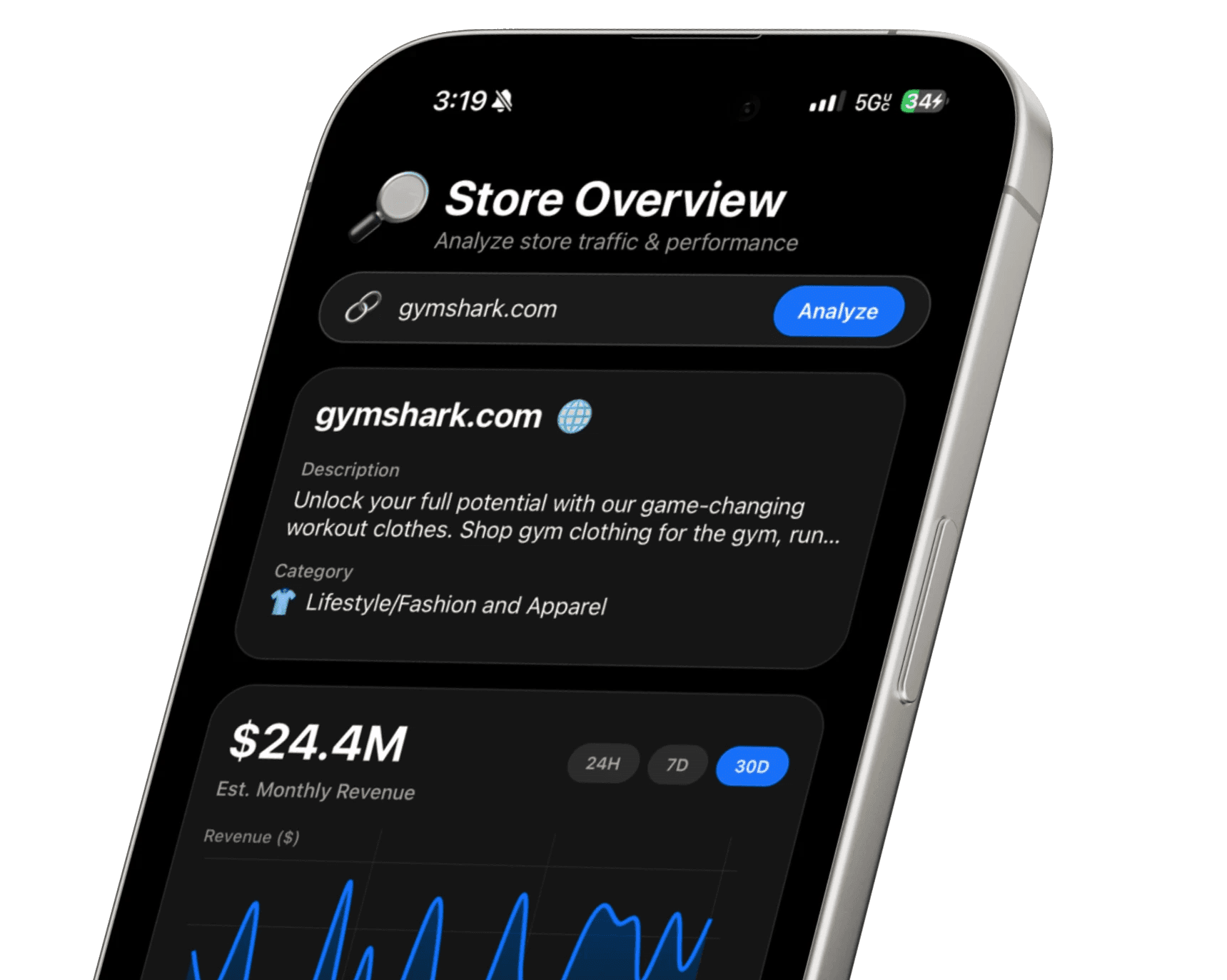
This is exactly what EcomSpy AI was built for.
Why EcomSpy AI Is the Simplest iPhone App for Store Insights
EcomSpy AI is designed specifically for dropshippers and ecommerce entrepreneurs who want clarity fast.
It focuses purely on store analytics, traffic intelligence, revenue insights, and trend discovery.
No distractions.
No unnecessary complexity.
Just actionable data.
Monthly Revenue Insights
With EcomSpy AI, you gain structured insights into store revenue and sales performance.
Instead of guessing how much a store is making, you can see performance trends that reveal growth or decline over time.
This helps you evaluate whether a store is worth modeling or avoiding.
30-Day Performance Trends
Short-term trends matter in dropshipping.
A product that is exploding this month may disappear next month.
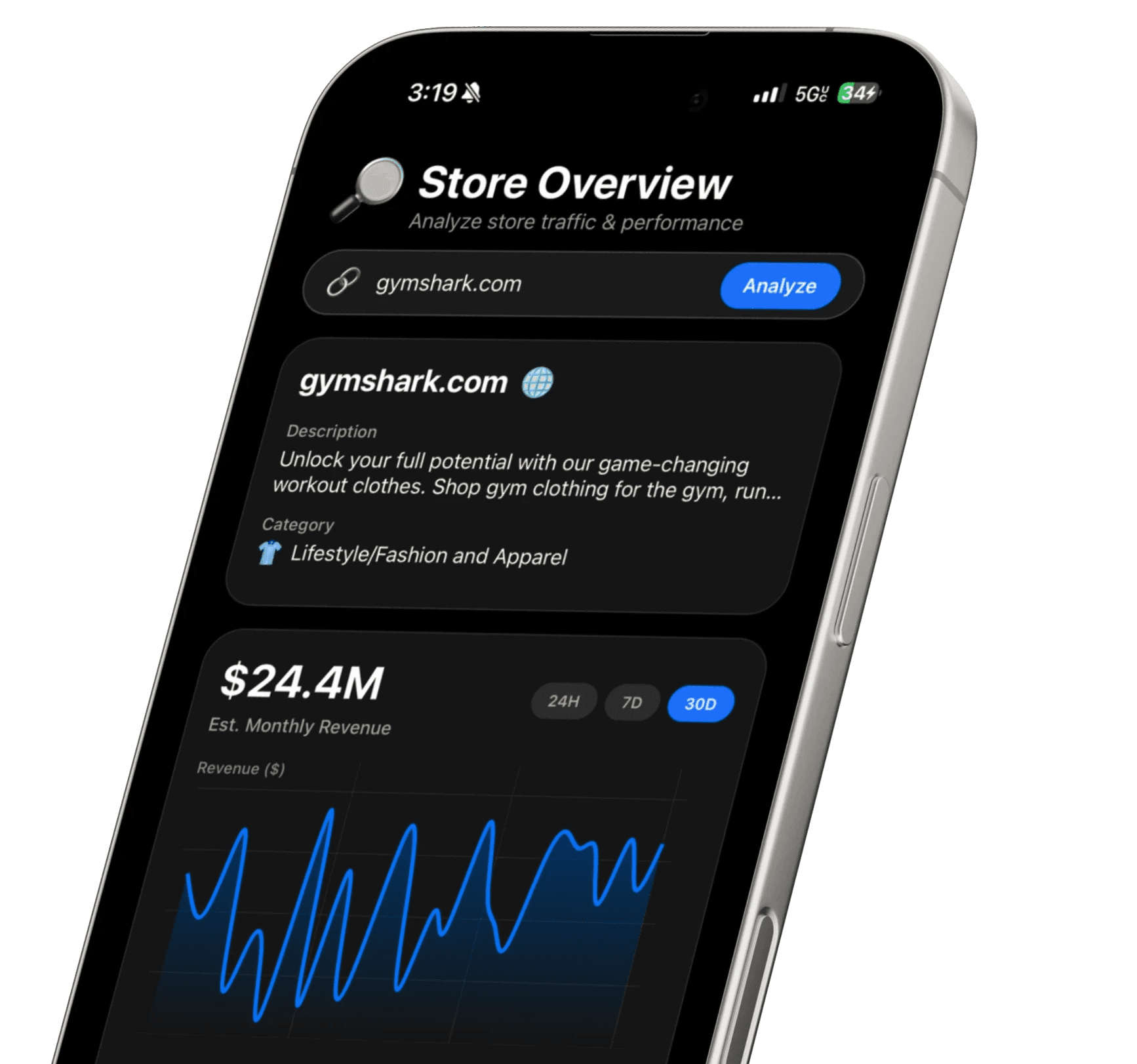
EcomSpy AI allows you to monitor 30-day sales trends, giving you a clearer understanding of momentum.
Trend visibility protects your ad budget and improves timing.
Traffic Insights and Pattern Comparison
EcomSpy AI provides traffic insights including visitor data, traffic sources, countries, and keyword visibility.
When you compare traffic patterns alongside revenue performance, you begin to see which stores are scaling effectively and which are struggling.
Side-by-side comparisons create clarity.
Instant Store Analysis
Speed is a competitive advantage.
Instead of manually researching one store at a time, EcomSpy AI delivers store overview analytics instantly.
You can also explore trending Shopify brands and use AI chat to ask questions about any store.
Unlimited store tracking history allows you to monitor competitors over time, revealing seasonal cycles and long-term growth patterns.
This transforms product research from reactive to strategic.
From Product Guessing to Strategic Research
Most beginners look for winning products.
Serious operators look for winning data patterns.
When you consistently track Shopify sales trends, you start noticing signals others miss.
You recognize when a niche is heating up. You see when brands are scaling aggressively. You detect when momentum is fading.
Instead of copying blindly, you enter markets with validation.
Instead of scaling emotionally, you scale with confidence.
Learning how to track a dropshipping store’s sales changes your entire mindset.
You stop chasing hype.
You start building strategy.
How Revenue Insights Improve Scaling Decisions
Scaling ads without revenue visibility is risky.
When revenue insights show consistent growth, you can increase budgets confidently.
When performance plateaus, you can optimize before overspending.
When revenue declines, you can pivot early.
This is how experienced entrepreneurs protect capital.
They don’t wait for losses to teach lessons.
They watch trends proactively.
EcomSpy AI simplifies this process by centralizing revenue and traffic insights into one streamlined platform designed for Shopify store analysis.
Building a Long-Term Ecommerce Advantage
Short-term wins feel exciting.
Long-term consistency builds wealth.
When you track competitor sales history over time, you see patterns that new entrepreneurs miss.
You understand seasonal demand cycles.
You recognize repeatable growth strategies.
You identify brands that scale sustainably rather than spike temporarily.
Unlimited tracking history turns scattered data into long-term intelligence.
And intelligence compounds.
Why Revenue Tracking Matters in Dropshipping
Dropshipping moves fast. Products explode. Markets saturate. Trends disappear.
The entrepreneurs who survive are the ones who understand performance data.
Tracking sales and revenue gives you clarity. It tells you whether demand is real, whether growth is sustainable, and whether momentum is accelerating or fading.
When you track a dropshipping store’s sales, you are not just looking at numbers. You are reading the market.
Revenue tracking helps you see whether a product is truly converting traffic into money. A store can look polished. It can run aggressive ads. It can dominate your feed. But if sales performance is weak, none of that matters.
Data protects your capital.
Instead of launching products blindly, you validate demand. Instead of scaling emotionally, you scale strategically. Instead of chasing hype, you follow trends backed by revenue insights.
That is the difference between hobbyists and operators.
Why Guessing Doesn’t Work in Ecommerce
Let’s be honest.
Guessing feels easier.
It’s faster to assume a viral ad equals massive sales. It’s comforting to believe a high-traffic store must be profitable. It’s tempting to copy what looks successful.
But guessing is expensive.
When you rely on surface-level signals, you risk entering saturated markets too late. You risk scaling products that peaked weeks ago. You risk burning ad spend chasing illusions.
Revenue tells the truth.
Traffic alone does not.
Engagement alone does not.
Brand aesthetics do not.
The ecommerce space is competitive. Your competitors are analyzing performance data. If you’re guessing while they’re tracking sales trends, you’re already behind.
Learning how to track a dropshipping store’s sales removes emotion from decision-making. And emotion is one of the biggest profit killers in this industry.
How Traffic and Revenue Correlate
Traffic and revenue are connected, but not in a simple “more visitors equals more money” formula.
Revenue is influenced by traffic quality, conversion efficiency, pricing strategy, and offer structure.
A store with moderate traffic but strong conversion optimization can outperform a high-traffic store with weak positioning.
This is why traffic insights must be paired with sales performance data.
Traffic Volume and Growth Patterns
Traffic volume gives context.
If a store’s visitor count is rising steadily over 30 days and revenue insights reflect growth, that suggests momentum. The store may be scaling ads effectively or building organic authority.
If traffic spikes suddenly and revenue follows, that often indicates a successful campaign launch.
But if traffic increases while sales remain flat, something is broken. Maybe conversion rates are weak. Maybe the offer isn’t compelling.
Traffic patterns tell a story. Revenue insights confirm whether that story leads to profit.
Traffic Sources and Geography
Understanding where traffic comes from matters just as much as how much traffic exists.
Paid traffic behaves differently from organic search. Traffic from one country may convert better than another. Keyword visibility can signal long-term brand positioning rather than short-term ad bursts.
When you combine traffic sources, top countries, and keyword visibility with revenue insights, you begin to see the full picture of store performance.
This is where most manual research falls short.
Manual Methods vs Modern Store Analytics
Before advanced analytics tools existed, entrepreneurs relied on manual tactics.
Some still do.
They monitor order numbers, study product reviews, analyze ad comments, and try to reverse-engineer sales performance through indirect signals.
While these methods can provide hints, they are incomplete and time-consuming.
Order numbers may not reflect true sales volume. Reviews represent only a fraction of customers. Social engagement does not equal transactions.
Manual tracking lacks trend visibility. You might see a snapshot of activity, but you don’t see 30-day momentum shifts. You don’t see traffic correlations. You don’t see comparative performance across competitors.
Modern Shopify store analytics change that.
Instead of piecing together fragments of information, you gain structured revenue and traffic insights in one place.
For dropshippers who test products frequently, speed matters. Time spent researching manually is time not spent executing.
How Competitor Revenue Insights Shape Strategy
Smart dropshippers don’t just look at products. They analyze store performance.
When you understand competitor revenue trends, you can validate niches before entering them.
If multiple stores in the same niche show consistent growth over 30 days, that suggests rising demand.
If revenue insights reveal decline across competitors, saturation may be setting in.
Timing becomes clearer.
Revenue momentum often reveals more than ad libraries ever could.
For example, if a competitor’s traffic increases sharply and revenue follows, they may have launched a strong campaign. If traffic remains stable but revenue climbs, they may have improved conversion rates or introduced a bundle strategy.
These patterns help you understand not just what is selling, but why.
And when you understand why, you can build smarter campaigns.
How to Track a Dropshipping Store’s Sales the Right Way
Now let’s answer the core question directly.
How do you track a dropshipping store’s sales without wasting hours on spreadsheets and assumptions?
The answer is structured store analytics powered by intelligent insights.
Instead of manually guessing conversion rates, calculating traffic assumptions, or watching engagement numbers, you rely on revenue and traffic insights that show performance trends clearly.
This is exactly what EcomSpy AI was built for.
Why EcomSpy AI Is the Simplest iPhone App for Store Insights
EcomSpy AI is designed specifically for dropshippers and ecommerce entrepreneurs who want clarity fast.
It focuses purely on store analytics, traffic intelligence, revenue insights, and trend discovery.
No distractions.
No unnecessary complexity.
Just actionable data.
Monthly Revenue Insights
With EcomSpy AI, you gain structured insights into store revenue and sales performance.
Instead of guessing how much a store is making, you can see performance trends that reveal growth or decline over time.
This helps you evaluate whether a store is worth modeling or avoiding.
30-Day Performance Trends
Short-term trends matter in dropshipping.
A product that is exploding this month may disappear next month.
EcomSpy AI allows you to monitor 30-day sales trends, giving you a clearer understanding of momentum.
Trend visibility protects your ad budget and improves timing.
Traffic Insights and Pattern Comparison
EcomSpy AI provides traffic insights including visitor data, traffic sources, countries, and keyword visibility.
When you compare traffic patterns alongside revenue performance, you begin to see which stores are scaling effectively and which are struggling.
Side-by-side comparisons create clarity.
Instant Store Analysis
Speed is a competitive advantage.
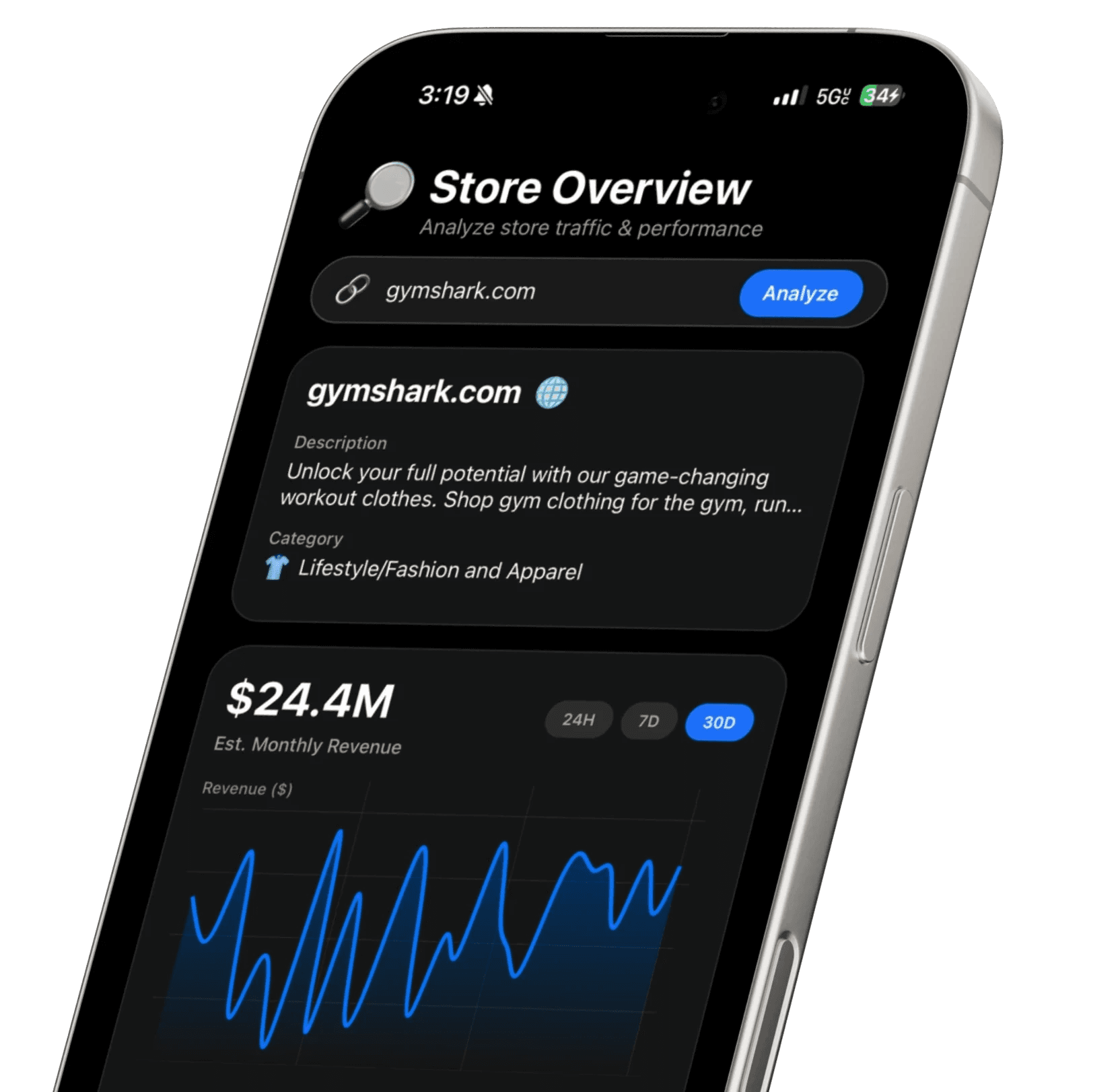
Instead of manually researching one store at a time, EcomSpy AI delivers store overview analytics instantly.
You can also explore trending Shopify brands and use AI chat to ask questions about any store.
Unlimited store tracking history allows you to monitor competitors over time, revealing seasonal cycles and long-term growth patterns.
This transforms product research from reactive to strategic.
From Product Guessing to Strategic Research
Most beginners look for winning products.
Serious operators look for winning data patterns.
When you consistently track Shopify sales trends, you start noticing signals others miss.
You recognize when a niche is heating up. You see when brands are scaling aggressively. You detect when momentum is fading.
Instead of copying blindly, you enter markets with validation.
Instead of scaling emotionally, you scale with confidence.
Learning how to track a dropshipping store’s sales changes your entire mindset.
You stop chasing hype.
You start building strategy.
How Revenue Insights Improve Scaling Decisions
Scaling ads without revenue visibility is risky.
When revenue insights show consistent growth, you can increase budgets confidently.
When performance plateaus, you can optimize before overspending.
When revenue declines, you can pivot early.
This is how experienced entrepreneurs protect capital.
They don’t wait for losses to teach lessons.
They watch trends proactively.
EcomSpy AI simplifies this process by centralizing revenue and traffic insights into one streamlined platform designed for Shopify store analysis.
Building a Long-Term Ecommerce Advantage
Short-term wins feel exciting.
Long-term consistency builds wealth.
When you track competitor sales history over time, you see patterns that new entrepreneurs miss.
You understand seasonal demand cycles.
You recognize repeatable growth strategies.
You identify brands that scale sustainably rather than spike temporarily.
Unlimited tracking history turns scattered data into long-term intelligence.
And intelligence compounds.
Frequently Asked Questions
Why is tracking a dropshipping store’s sales important?
Tracking sales reveals whether a store is genuinely performing. It helps validate demand, confirm trends, and reduce risk before launching products.
Can traffic alone determine success?
No. Traffic must convert into sales. Traffic insights combined with revenue performance provide a clearer understanding of store health.
How often should I analyze competitor performance?
Weekly reviews are ideal in fast-moving niches. Monitoring 30-day trends helps you spot momentum shifts early.
Is manual research reliable?
Manual research can provide hints but lacks trend visibility and comprehensive analytics. Structured store insights provide clearer decision-making support.
What makes EcomSpy AI different?
EcomSpy AI centralizes revenue insights, traffic intelligence, store overview analytics, trending brands, and AI-powered store analysis into one streamlined iPhone experience.
Is EcomSpy AI suitable for beginners?
Yes. Whether you’re just starting or scaling aggressively, having structured Shopify store analytics simplifies research and improves decision-making.
Conclusion:
In ecommerce, data beats assumptions every time.
If you truly want to master how to track a dropshipping store’s sales, you must move beyond hype and surface-level signals.
Revenue insights validate demand.
Traffic intelligence explains growth.
Competitor analysis sharpens strategy.
EcomSpy AI brings all of this together into one simple, powerful solution designed specifically for dropshippers and ecommerce entrepreneurs.
Stop guessing.
Start using insights.
Download EcomSpy AI today and turn store analytics into your competitive edge.
Blogs
Check Out Other Articles
Discover how our powerful tools make managing money simpler, faster, and smarter.
Blogs
Check Out Other Articles
Discover how our powerful tools make managing money simpler, faster, and smarter.
Blogs
Check Out Other Articles
Discover how our powerful tools make managing money simpler, faster, and smarter.

Download EcomSpy AI Now For Free
Join thousands of business owners already using EcomSpy AI to research and validate winning products.
Bank-Level Security
No Hidden Fees
Cancel Anytime

Download EcomSpy AI Now For Free
Join thousands of business owners already using EcomSpy AI to research and validate winning products.
Download EcomSpy AI Now For Free
Join thousands of business owners already using EcomSpy AI to research and validate winning products.